I am beyond excited to share this author interview with you all today. It has been an absolutely magical getting to know P.J. Richards as she is ever so mystical, and ‘an occasional unicorn’, so grab yourself a brew, sit back and enjoy this piece… P.J. was very kind to share her art as well, so I have included some of the images for you to feast your eyes upon!
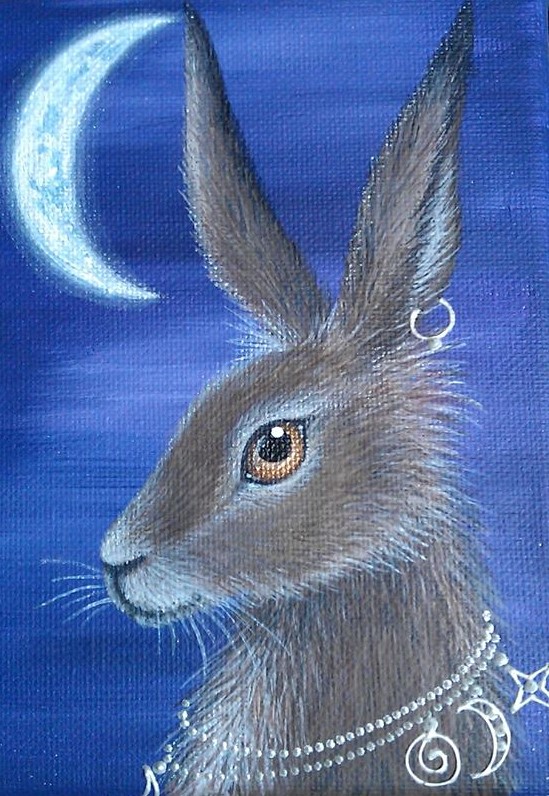
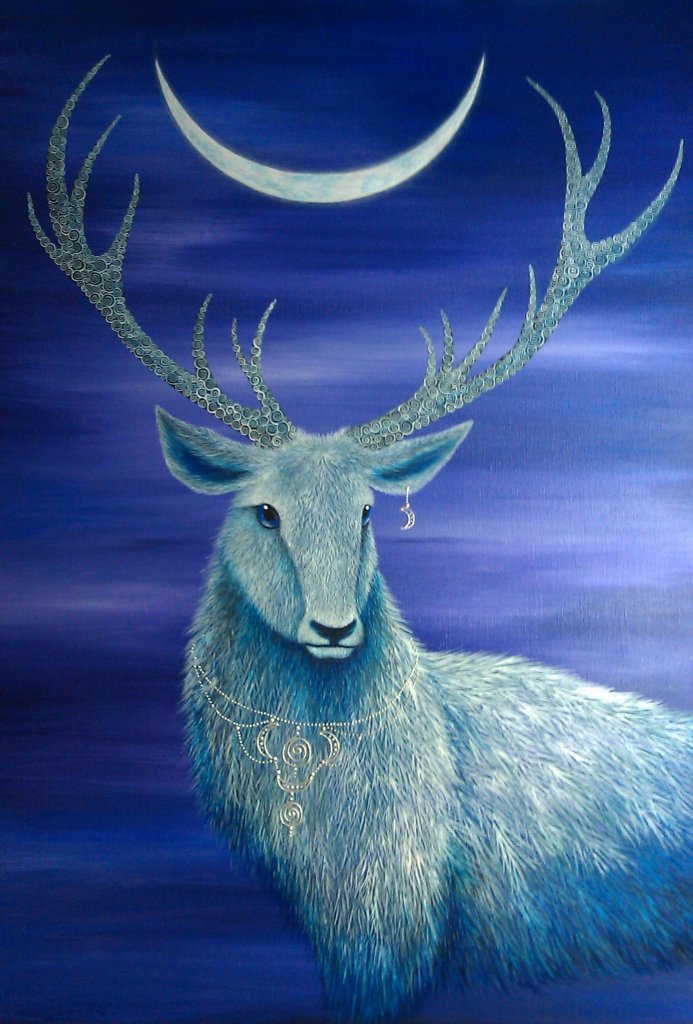

From the moment I saw your x-Twitter feed, I was captivated by the content. Can you reveal a bit more about yourself? Who is P.J. Richards?
Firstly, thank you so much for this opportunity, I really appreciate you taking the time to do this. 🙂
Right, well, where to start?… I guess I’d consider myself a ‘work in progress’ I’m introverted, so self-analysis/criticism is my default setting. I do try to learn and improve as I go through life, not always successfully. Self-taught in everything I do, I’ve always been a natural loner, happiest in nature and my own imagination – though I regularly perform with my medieval display group ‘Bowlore’ (incidentally named after the mystical relationship with yews in my novel) where my fleeting extrovert side gets an exuberant outing! Creativity is the bedrock of my identity, has been since childhood – art and writing is my calling, and a deep desire to bring magic into the mundane. Having said that, I also cultivate a stringent sense of rationality/cynicism, so that I can see past the ‘woo’ and perceive moments of true magic when they happen – and they do.
I love that you mention introversion in your introduction. I think it’s important to keep reminding the world that introverts are not always simply tucked away within their walls (figuratively and literally) and that great many great humans doing great things are actually introverts. With creativity being the bedrock of who you are, is it safe to say that your written works (and even art) are more like an extension to you as opposed to something that is separated/stand alone from who you are? You know because there are authors that say that whilst they get their inspiration from the real world, they are very vigilant at making sure they as a person has now connection to the book.
Absolutely, my writing and art are very much aspects of myself, of what I hold dear, and an expression of my relationship with the spiritual (light and dark) aspects of nature and folklore – if I separated myself from what I create I would lose the spark that inspires it. I do understand why other authors might want to distance themselves from their works, but I identify strongly with the essence of my ideas and so don’t feel the need.
You have published works in anthologies and you also have a debut novel out, called Deeper, Older, Darker – what can the reader expect from your novel?
Deeper Older Darker entwines legend and landscape in a modern day setting. I wanted to take folklore out of the reference books and set it free to roam (and hunt) in the West Country where I live. I love writing lyrical prose but I also crave excitement – story is king – so my novel is an adult contemporary mythic-fantasy thriller. The heart of the narrative explores the resurgence of a mystical relationship between longbow-archery and ancient yews, our connection with the land and its history, and the quest for the new Thirteen Treasures of Britain.


It’s evident that you have a love for folklore… when did your love for folklore start? Has it always been around you and within you? Was it nurtured to life by someone or something?
I can’t really pinpoint a time when my fascination with folklore began, I believe it just grew from my innate animism. I’ve always been aware of an Otherworld in some form, running parallel to ours, and longed for a Narnian wardrobe to reach it. I guess my art and writing is my way of creating the doorways I couldn’t find. Due to spending my childhood in Seventies rural Essex, haunted by Black Shuck, reading ‘Misty’ comics and ‘Folklore, Myths and Legends of Britain’, when even the current-affairs TV programmes carried reports of supernatural occurrences, it was inevitable I’d end up like this! (For a flavour of the eerie-Essex of my youth check out Hookland on Twitter.)
Jed and Judith stood at the summit of Glastonbury Tor, huddled together in the lee of the tower. The gutted belfry howled and moaned as the wind tore through it; the two open doorways and roofless tower acting like a massive chimney, pulling in and accelerating the surge of air to such an extent, that there was more shelter to be found on the exposed crown of the hill than within its thick stone walls.
Deeper, Older, Darker – P.J. Richards
I imagine that people who have a lot of folklore knowledge stored within them, have a whole different view of the real world around them. How do you view the modern world compared to the folklore element you tie into your stories? Is the real world something that you would easily and swiftly trade for the times when folklore was the real world?
I try to maintain a balance between mysticism and pragmatism – I have no desire to live in a time where if I survived childhood I probably would have died giving birth. A lot of folklore stemmed from desperate, fearful attempts to control a world that could threaten you and your loved-ones in myriad awful ways. Swapping ignorance for science is always a good thing. Having said that, I feel a profound calling to highlight and value the inherited/instinctive knowledge we all share, and the mutually-beneficial relationship we can have with nature and the sacred landscape. Folklore should not be a historical relic, preserved and poked at, but a living thing that we, and the generations after us, nurture and embellish.
Is there anything in this day and age that you would imagine would be a great folk tale in centuries yet to come?
I’d like to hope that the magical symbiosis I devised between archery and the ancient yews might qualify! But the obvious answer is that those rectangular scrying-mirrors we all carry – allowing us to see anything and talk to anyone around the world – would likely feature in many a tale told in some distant, dystopian future.
Let’s talk a bit about your writing process next. What kind of a writer are you? Are you a strict planner or do you go with the flow? Are you a traditional type of writer who makes use of all the available elements (tropes, clichés and twists), or do you like to experiment? Furthermore, do you envisage your writing to carry forward a more serious message, a lesson to be learned from (on environmental or society issues) or is it more about a certain vibe and fun? Or perhaps, a fusion of both?
I mostly write my way into a narrative – a scene or a line of dialogue will pop into my head and inspire a chapter or short story. Essentially I make everything up as I go along, which sounds rather random but I’ve learned to trust the process. Even when I find myself staring at a blank page fearing I’ve lost my way, I know to wait for the story to reveal itself. Planning my writing would take all the enjoyment away and turn it into homework!
Being an artist I have a very visual imagination so I’ll also run the narrative as a ‘film’ in my head, to decide which character/situation I want to see next.
I can’t stand info-dumping prose and expositionary dialogue – I find it patronising – therefore I tend to throw my readers into the action, revealing details only as and when needed. but I’m diligent about resolving plotlines, there are no unanswered questions other than those leading towards an ongoing storyline. I don’t often describe how characters look when I first introduce them unless it’s pertinent to the plot, preferring to let their behaviour and speech define them – probably because I grew up listening to radio plays where characters are identified by their voice alone.
In Deeper Older Darker I write about esoteric events happening in the ordinary world, and devised a way to show that shift between realities by moving from past tense to present in italics to create the timeless, dreamlike atmosphere of the Otherworld. I’m an impatient reader, and will skip even wonderful prose in a book if it’s not advancing a storyline, so I hold myself to that same standard, and work hard to ensure my writing is exciting as well as lyrical. I don’t set out to convey any messages in my work but I do write from the heart, so when I see reviews saying how my novel has made a reader appreciate ancient yews, inspired them to connect with the folklore and historical sites featured in the story, I feel I’ve done A Good Thing.
I think as a reader, I am similar to you – impatient! 🙂 But I must say, I do tend to approach books quite individually and when most would pick on nitty gritty’s, I gloss over the few details that some find obsessively unacceptable and simply rate the overall feel and outcome.
Time was so abundant here it lost its linear nature and hung suspended in the air with the dust motes and dandelion seeds. Peter could see beyond the peaceful façade, though, and instead perceived the scene as a freeze-frame in a duel. The evidence was all around him. A damaged bough, crippled by the axes of the faithful long ago, had grown back high and hooked, to score its tally through the church’s ridge in obsessive red lines; another had gouged one of the windows to reach inside, and lay snarled in lead, ring-barked by the stone mullions.
Deeper, Older, Darker – P.J. Richards
So, you’re not only a writer, you’re also an artist – do you think writers who have the skill for visual arts have an upper hand when it comes to putting the descriptions of people, places and scenes to paper? See, I am not artistic at all, I can even mess up a stick man, so I imagine that artists have this superhuman brain where their hands are directly and skillfully connected to the image they have in their head and – boom, magic and miracles happen on paper!
Ah, if only! 😁 One of my very earliest memories is of having the clear image of a fairytale princess in my head, trying to draw it, then getting so frustrated and upset when what came out on the page was a simple stick figure – that disconnect still haunts me!😉 But the urge to draw was such a fundamental part of me I never gave up, and taught myself over the years by copying illustrations and pictures that I loved. By the time I was in my late teens my skills caught up with my imagination (though I still refine and learn with every piece I do).
I always identified as an artist first and my writing was something I did to amuse myself (as a child to conjure up worlds to play in; as an adult for creative recreation) but that changed when I had my first – very wakeful – child and found that having a baby on my lap whilst doing detailed pointillism did not work for either of us! But soon my imagination, fuelled by lack of sleep and new-parent paranoia, began ‘backing-up’ and unfortunately found an outlet through my latent OCD.
I knew I needed a creative outlet to channel the intrusive thoughts into a positive form, and figured that I could write anywhere/anytime, and if a little hand grabbed the pen or scrunched the paper it wouldn’t matter. Once I’d made that decision the first scene in what grew into Deeper Older Darker – of an ancient yew, a ruined church and an elemental-haunted churchyard – manifested almost immediately, and describing that image drew me into the narrative. I now understand that my writing and my art are indivisible, and originate from exactly the same place in my psyche.
Having that image in your head and then becoming frustrated when it doesn’t land on paper as you envisioned it – there’s something in this. I’m quite the kind of person who tries something for the first time and wants to give up when I don’t get it right first time. And logically, I know that no one can really do something right for the first time, but this is what sets people.. artists and writers apart from those who simply have the aspirations – the seeing it through, the trying again, and practicing until the skill is developed. This is a great textbook example – and a great tip for people starting out – don’t give up. No one just snapped their fingers and got it right the first time. People who have succeeded, have put in a LOT of hours, blood, sweat and tears to hone their skills.
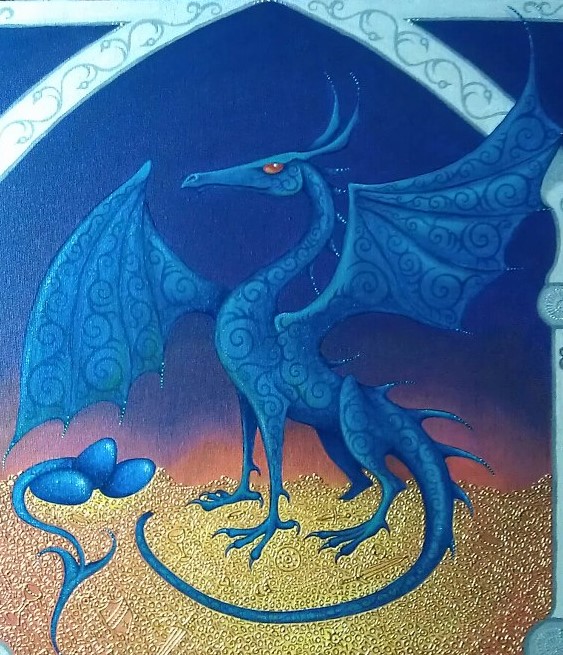
Now, the creative outlet – time and time again, and actually 99% of the times, it is the creative outlet that has helped writers and artists channel their innermost turmoil and emotions and feelings. This can be a bit of a controversial question but do you think, overall, the negative emotions within a person cause more creativity than the positive ones? Or, do you think it’s really a very individual thing and 50/50?
I believe it’s an individual thing. I totally appreciate how some creatives can benefit hugely from the cathartic effect of pouring negative emotions and anguish into their creativity, and the results can be astonishing – and can be helpful to others who see a reflection of their own turmoil in the work but can’t express it. I would find it exhausting to produce work that way, and way too exposing! My motivation is to conjure little oases of Otherworldly magic and beauty for myself and the reader/viewer.
With your art and writing being so much in sync with who you are as a person, does that mean that you will never attempt writing and drawing something entirely different? Even if for trying sake? And, are there themes or topics you are certain you will never entertain – not in your books nor your art?
I do feel it would be a benefit to stretch myself and write/draw out of my comfort-zone, but my creative time is limited so I tend to concentrate on what inspires me rather than treating it as an exercise. I would never tackle a topic or theme involving serious violence or cruelty, out of respect for those who have endured it. Also it’s not a subject I would want to research – I find it hard to deal with having images like that in my mind.
Do you have a pet peeve when it comes to writing?
Hmm, pet peeves… well, along with every other author – I’m sure – it would be random outside interruptions cutting across the writing flow, especially since I’m already adept at wasting valuable writing-time with displacement activities! Also, taking ‘pet’ literally 😉 it would be my cats walking over the keyboard and adding their own feline-words to my work – exasperating, but I love their company when I’m creating so it’s worth the hassle!
What is it with cats and keyboards!? They’re arrogant little beings, the cats, hahaha! I think they know exactly what they’re doing when they do the keyboard prancing!
The Land remembers all its children. The mighty, the ephemeral, the favoured and the damned. All recorded and cherished in patterns of rings, or pressed between layers of sediment. These writings quicken at an empathic touch; baring souls long buried, crying out for a second chance, in a tongue understood only by those wistful and devoted enough to learn the language of the lost.
Deeper, Older, Darker – P.J. Richards
You can have dinner with three famous authors, dead or alive, who are they and why?
My dinner guests would be Tolkien, C S Lewis and Dylan Thomas. I’d probably be content to just sit back and listen to their conversation, but I’d also want to thank them: Tolkien and Lewis for creating such thoroughly believable realms of adventure, poignant beauty and magic (that I desired as a child, and then shared with my children), and Thomas for Under Milk Wood, in which he weaves words with such bardic power that I smile with wonder every time I read/hear them.
In this day and age I am afraid we cannot get past the obvious question… Artificial Intelligence. AI has a strong presence now both in fiction and in real life. What’s your take on AI – is it an opportunity, or is it a bit scary? A bit of both?
AI is worrying – apart from being a plagiarism nightmare currently, it appears to be impossible to anticipate where it will lead. I’ve listened to expects and they have no answers, only doom-laden scenarios. For all my luddite tendencies I’m not averse to tech, and we’re still at the point where it’s possible to tell AI from human creativity, but I fear that won’t last for long.
What’s next for P.J. Richards?
My art is a constant, but my main focus is on the sequel to Deeper Older Darker. I’m most of the way through writing it and it continues and develops the story arc, set a few months after the events in DOD. There will be a third book in the series, so that’s my life mapped out for the foreseeable! 😉

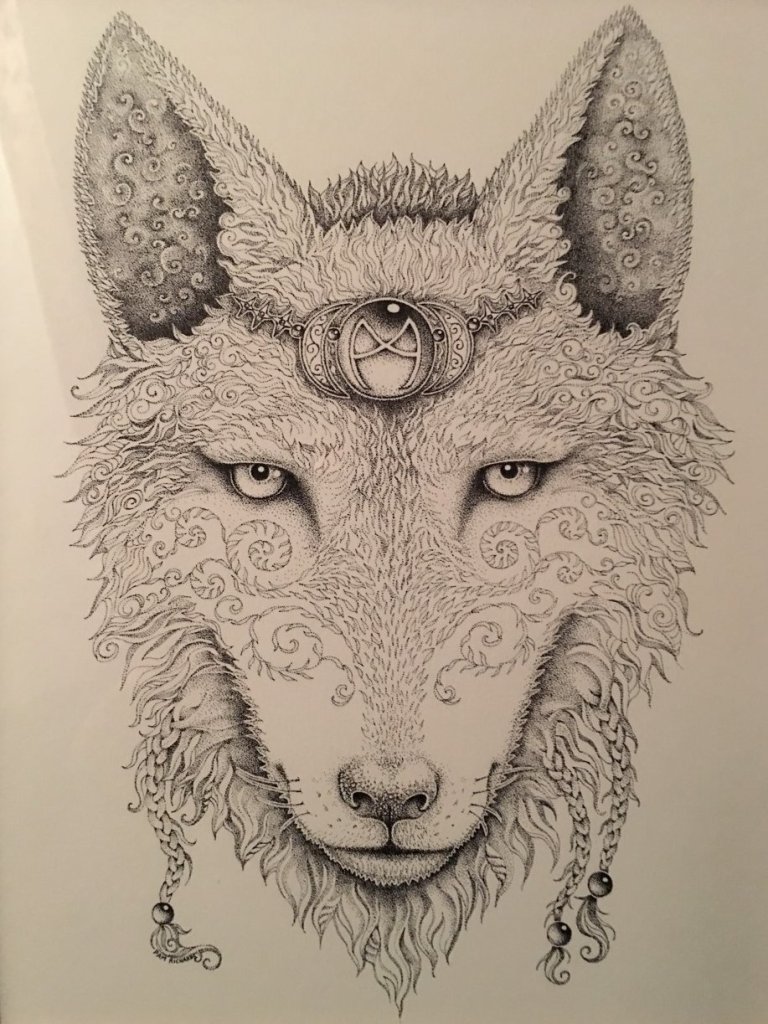
About Deeper, Older, Darker
Ancient yew trees – living links between the past and present – embody a magical discipline that offers a way to reach beyond the mundane world.
An occult group has rediscovered this knowledge, and uses it to experience a reality where legends live, magic is currency and willpower is a weapon.
They find themselves drawn into a hunt for the last magical artifacts left in Britain – but the land is an entity with its own deadly agenda, and is harnessing these individuals for its own ends.
About P.J. Richards
P. J. Richards is a writer and artist living in Somerset, surrounded by the nature and mythic landscapes that inspire her, but spent much of her childhood roaming rural Essex, home of the spectral hound Black Shuck – which definitely left its scorch-marks on her imagination. In all her work she seeks to manifest the liminal states of mind where magic lives.
Several of her short stories have been published in anthologies and online literary zines, and she is close to completing the sequel to Deeper Older Darker.
Follow her on TwitterX @P_J_Richards for excerpts, art and folklore.
 Cover to Cover
Good interview.
LikeLike
I really enjoyed seeing all the art! 🎨
Great questions and wonderful interview. 🙂
LikeLike